Wet/Dry Vacs: A Plain Buyer's Guide
Choose a wet dry vacuum by the mess you clean most: match tank size, hose, filter and power source to that job, then check storage space and how you will empty it.
On this page (12 sections)
- What should you check before buying a wet dry vacuum?
- How much tank capacity do you need?
- Which hose, filter and accessories matter?
- Should you choose corded or cordless power?
- Which wet dry vacuum fits each kind of cleanup?
- When is a blower port useful?
- What should you know about wet pickup?
- How do you empty and maintain a shop vac?
- What jobs call for a different vacuum?
- How do you choose between brands and materials?
- What is a shop vac used for?
- Which wet dry vacuum should you buy?
Choose a wet dry vacuum by the cleanup you do most: match its tank size, hose, filter and power source to that job, then check storage space and emptying. A compact model can be easier to carry and store, while a larger drum can mean fewer stops during a long cleanup.
Start by naming the mess: water in a basement, sawdust in a garage, crumbs in a vehicle, or leaves around a work area. Then compare the setup each job needs.
A wet dry vacuum is useful because it can handle dry debris and, when configured as the maker directs, liquid pickup.
This guide explains which features matter and where each trade-off shows up. For a shorter list of models, see our best wet dry vacuums for garage and home.
What should you check before buying a wet dry vacuum?
Choose the vacuum that fits your most common job and your storage spot. Tank capacity matters, but so do the hose, filter, power source and how the vacuum moves.
Use this checklist to narrow the options:
| Check | Why it matters |
|---|---|
| Tank capacity | A larger drum may reduce emptying stops, but takes up more room. |
| Hose diameter and length | A wider hose can suit larger debris; reach affects how often you move the vacuum. |
| Filter and bag setup | Dry dust, larger debris and liquid pickup can call for different configurations. |
| Power source | A corded model needs an outlet; a cordless model depends on a compatible battery. |
| Mobility and storage | Handles, casters and onboard storage affect carrying, rolling and putting tools away. |
| Drain and emptying | A tank drain may make liquid disposal easier on larger vacuums. |
| Blower function | A blower port can help move leaves and clippings from a work area. |
Check the manual for the correct filter setup for each type of pickup. A vacuum that can collect liquids still needs to be used and emptied according to its instructions.
If your main job is dry construction dust, a shop vac may not be the right tool. A dust extractor is designed for different dust-control needs; compare the two in shop vac vs dust extractor.
How much tank capacity do you need?
Pick a tank based on how much you expect to collect before you can empty it. A smaller vacuum is easier to store and carry, while a large tank is useful when cleanup jobs produce more debris or liquid.
Capacity describes the tank volume, not a promise about the amount of material you can collect in one go. Debris type, filter condition and the usable room around the filter all affect what fits during a job.
| General size | Often suits | Trade-off to consider |
|---|---|---|
| Small, around 2–4 gallons | Vehicle interiors, quick spills and tight storage | Less room before you need to empty it |
| Mid-size, around 5–6 gallons | Regular household and garage cleanup | A balance between capacity and storage |
| Large, around 10–12 gallons | Bigger projects and more liquid or debris | Takes more room and can be awkward to carry when full |
These ranges are starting points, not fixed rules. A compact vac may be enough for a large garage if you clean small areas at a time, while a busy workshop may benefit from a larger drum.
For a more focused comparison, see our guides to 5-gallon shop vacs, 6-gallon wet dry shop vacs, and 12-gallon wet dry shop vacs. If storage is tight, compare small shop vacs.
Which hose, filter and accessories matter?
Match the hose and included tools to the surfaces and debris you plan to clean. A wide hose can help with larger pickups, while a crevice tool or car nozzle reaches narrow spaces.
A long hose can let you clean farther from the tank, but its diameter and flexibility matter too. Check the hose connection size before buying accessories, and read our shop vac hose size guide if you need to match a replacement hose.
For dry debris, the filter catches dust before air passes through the vacuum. A bag can collect debris and simplify disposal, but bags and filters are not interchangeable on every model.
Our guide on whether a shop vac needs a bag or filter explains what to check.
Before wet pickup, check the manual for the right filter and bag arrangement. Some vacuums need a foam sleeve or another setup for liquids.
After a wet job, empty and clean the tank as directed.
Accessories can make a vacuum more useful, but only if they fit the work. A utility nozzle suits broader areas, a car nozzle fits vehicle cleanup, and extension wands help reach farther without moving the tank.
For leaves or clippings, a blower port may be useful; see shop vacs with a blower port.
Should you choose corded or cordless power?
Choose corded power for longer cleanup sessions near an outlet and cordless power when moving between locations matters more. Cordless operation depends on battery compatibility and charge, so check what is included.
A corded model avoids battery changes during a job, but you need a safe route for the cord and an outlet within reach. Cord length, hose length and where the tank sits all affect how much area you can cover without unplugging or repositioning it.
A cordless vacuum can be convenient for vehicle interiors, small spills and spots without a nearby outlet. Some models can also run from a cord, but check whether the battery and charger are sold separately.
Do not compare peak horsepower alone. That figure is a motor output measured in laboratory testing, not the same as a vacuum's operational horsepower or a complete measure of real-world pickup.
Which wet dry vacuum fits each kind of cleanup?
Pick a model around the job, tank size and power setup that make sense for you. These four examples show how portable, large-capacity, wheeled and cordless options differ.
DeWalt DXV04T: a compact corded vac
The DeWalt DXV04T has a 4-gallon tank and a 7 ft hose. Its toolbox shape and carry handle are intended to make it easier to bring to a job, and it includes a cartridge filter for small dry debris and wet materials.
The built-in power cord is 20 ft long, and the vacuum has accessory storage. Those details can help if you need a portable vac but still want a corded setup.
Consider it for vehicle cleanup, smaller garage jobs or quick spills. If you often collect a larger volume of debris or liquid, compare its 4-gallon tank with a larger model before choosing.
For more DeWalt options and trade-offs, read best DeWalt shop vacs.
Craftsman CMXEVBE17594: larger tank and blower port
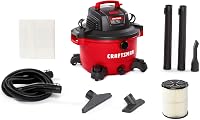
The Craftsman CMXEVBE17594 has a 12-gallon tank, a 2-1/2 in diameter hose and a built-in blower port. Its 20 ft power cord and included extension wands, utility nozzle, car nozzle, wet nozzle, filter and dust collection bag cover several common cleanup setups.
The hose has Dual-Flex connections that allow 180-degree movement at each end. Craftsman also includes an extra-large drain and provides a 3-year limited warranty.
Consider it for a garage or renovation cleanup where a larger tank is useful. Its size may be more than you need for a quick car cleanup or a small storage area.
See our Craftsman wet dry shop vac guide for a focused comparison.
Shop-Vac 5761011: wheeled 10-gallon option
The Shop-Vac 5761011 has a 10-gallon tank, four casters and a built-in tank drain. It includes a 7 ft Lock-On hose, two extension wands, a wet/dry floor nozzle, cartridge filter, foam sleeve and filter bag.
The vacuum has a 20 ft power cord and onboard cord and accessory storage. Its 90 CFM blower function can help move leaves or patio mess when you need to clear debris instead of vacuuming it.
Consider it if you want a wheeled vacuum and expect to clean larger areas. If you need a smaller drum, compare its 10-gallon capacity with our best 5-gallon shop vacs.
DeWalt DCV581H: a cordless and corded option
The DeWalt DCV581H has a 2-gallon tank and can run on a 20V MAX battery or a cord. The battery and charger are sold separately, so check your existing tools and batteries before choosing it.
Its 5 ft hose has a 1-1/4 in diameter, and it includes a wide nozzle, crevice tool and HEPA filter. The filter is washable and reusable.
Consider it for smaller messes where flexible power options matter. Its 2-gallon tank is much smaller than the 10- and 12-gallon examples above, so it may need more frequent emptying for bigger jobs.
For a model-to-model comparison, read DeWalt DCV580H vs DCV581H.
When is a blower port useful?
A blower port can help move loose leaves, grass clippings and patio debris from a work area. It is useful for clearing material into a pile, but it does not replace a leaf blower for every outdoor job.
The Craftsman CMXEVBE17594 has a rear blower port, and the Shop-Vac 5761011 has a blower function. Check the instructions before changing the hose setup, and use eye protection when blowing debris.
A blower can scatter dust or small debris, so consider where it will land before starting. For more on the job, see whether a shop vac can blow air like a leaf blower and whether a shop vac can pick up leaves.
What should you know about wet pickup?
A wet dry vacuum can collect liquid when the model and filter are set up for wet pickup. Follow the manual for filter changes, safe operation and tank emptying.
Do not assume every filter, bag or accessory works for both wet and dry debris. A dry collection bag can be unsuitable for liquid.
If you're cleaning up a spill, keep the vacuum away from flammable liquids and hazardous materials.
Some jobs need a different kind of tool. A wet vac may be built for liquid cleanup, while a shop vac is a general-purpose wet and dry vacuum; our wet vac vs shop vac guide explains the difference.
For a specific home maintenance question, see whether a shop vac can clear an AC drain line.
How do you empty and maintain a shop vac?
Empty the tank before debris reaches the filter or blocks airflow, and clean the filter as the manual directs. A full tank, clogged filter or loose connection can reduce pickup.
Unplug a corded vacuum before maintenance. For liquid pickup, use the tank drain if the model has one; otherwise, follow its instructions for lifting and emptying the tank.
Our guides show how to empty a shop vac without a mess and how to clean a shop vac and its filter.
If suction drops, check the hose, filter, bag and tank for blockages or buildup before assuming the motor has failed. See why a shop vac loses suction for a step-by-step check.
What jobs call for a different vacuum?
A shop vac is a general cleanup tool, but some tasks need equipment made for that job. Match the tool to the material and the maker's safety instructions.
A dust extractor is designed for specific dust-control uses, while a standard shop vac may not be suitable for fine hazardous dust. For workplace exposure to silica, see OSHA's respirable crystalline silica guidance.
A shop vac can also be the wrong tool for a job that needs a dedicated attachment or access point. For example, read whether you can clean gutters with a shop vac before choosing a gutter kit, and check the vacuum maker's instructions for the setup.
How do you choose between brands and materials?
Compare the actual model features and the job you have, rather than relying on a brand name alone. Tank capacity, hose setup, attachments, storage and warranty can vary within one brand.
For a direct brand comparison, see Ridgid vs DeWalt shop vacs or Shop-Vac vs Craftsman. If a quieter model is on your shortlist, read whether a DeWalt StealthSonic shop vac is worth it.
Tank material is another choice, but it should fit your use and storage needs. Compare stainless steel vs plastic shop vacs before deciding which style suits your space.
A model review can answer narrower questions about fit and features. See the DeWalt DXV04T 4-gallon review, Craftsman CMXEVBE17594 12-gallon review and Shop-Vac 9303511 2.5-gallon review for model-specific details.
What is a shop vac used for?
A shop vac is used to collect dry debris or liquid from jobs such as garage cleanup, vehicle interiors and small spills, when the vacuum is designed and configured for the material. It can also help with some outdoor cleanup if the model has a blower function.
The right attachment and filter depend on the job. Read what a shop vac is used for before using one for an unfamiliar task.
Which wet dry vacuum should you buy?
Choose a compact 2- to 4-gallon vacuum for small jobs and easy storage, a 5- to 6-gallon model for regular household cleanup, or a 10- to 12-gallon drum when larger projects make fewer emptying stops useful. If you clean away from outlets, check whether a cordless model's battery and charger are included.
Next, compare the hose, filter setup, drain, accessories and storage features against your planned jobs. For model recommendations, start with our best wet dry vacuums for garage and home roundup.
Frequently asked questions
What size wet dry vacuum should I buy?
Choose a tank size based on how much debris or liquid you expect to collect between emptying. A compact vac suits car cleanup and small spills, while a larger tank can reduce stops during garage projects.
Check the outside dimensions too, since capacity alone does not tell you how much storage space it needs.
Can a wet dry vacuum pick up water?
Many wet dry vacuums are designed for liquid pickup, but you need to follow the model's instructions for the right filter or sleeve and safe use. Unplug the vacuum before changing its setup, and empty the tank after wet cleanup.
Never vacuum flammable liquids or use a household shop vac to handle hazardous materials.
Do I need a bag in a wet dry vacuum?
A collection bag can make dry debris easier to contain and dispose of, while a filter protects the motor from dust. The right setup depends on the model and the debris, so check its instructions before use.
Wet pickup often calls for a different filter arrangement than dry cleanup.
Is a shop vac the same as a wet dry vacuum?
Shop vac is a common name for a wet dry vacuum, though vacuums differ in capacity, power source, filtration and included tools. Some are sized for a vehicle or a small spill, while others suit a workshop or renovation cleanup.
Compare the intended jobs and accessories rather than relying on the name alone.
Can I use a wet dry vacuum for fine construction dust?
A standard wet dry vacuum may not be suitable for fine construction dust, especially hazardous dust such as silica. Check the tool and vacuum maker's dust-control guidance, and use equipment designed for the hazard and task.
OSHA explains the requirements for controlling respirable crystalline silica at work.