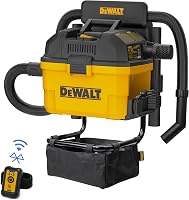
8 Best Shop Vac Accessories for Woodworking Dust Collection (November 2026)
The best shop vac accessories for woodworking dust collection include the POWERTEC 2-1/2" to 2-1/4" Dust Collection Reducer for fitting a vac hose to small tool ports, the O'SKOOL Automatic Vacuum Switch for hands-free vacuum start and stop, and the Mullet Cyclone Dust Collector for keeping the vac filter clean.
On this page (9 sections)
- Shop vac dust collection add-ons ranked by how much they change your setup
- How these picks compare side by side
- How we compared these dust collection add-ons
- What should you check before buying dust collection for a woodworking shop?
- Which separator fits my vac hose and bucket?
- Does a cyclone separator really protect the filter?
- Should the vac start when the tool starts?
- Where do the accessories sit in a full dust collection plan?
- The verdict on the best accessories for woodworking dust collection
The best overall pick is the POWERTEC 2-1/2" to 2-1/4" Dust Collection Reducer, because a dust setup is only as good as its weakest connection. Most benchtop tools have a 2-1/4 in port and most vacs come with a 2-1/2 in hose, and this two-pack bridges that gap with a tapered fit that cuts air leaks.
If you want the full setup, pair it with the Mullet cyclone for chip-heavy work or the PEMEDOR dual cyclone for sanding dust. Then add the O'SKOOL automatic switch so the vac runs only when the tool does.
That combination is the practical answer to the best shop vac accessories for woodworking dust collection: a strong wet/dry vac, a good hose and adapter, and a pre-separator in front of the filter. The vac itself matters less than the path the air takes.
Our picks at a glance
-
1
 Best for fitting a vac hose to small tool ports
POWERTEC 2-1/2" to 2-1/4" Dust Collection Reducer
9.7/10 our score
See it on Amazon -
2
 Best for hands-free vacuum start and stop
O'SKOOL Automatic Vacuum Switch
9.5/10 our score
See it on Amazon -
3

- 4
 Best for reach across a long benchCheck it
- 5
 Check it
PEMEDOR 2.5'' Dual Cyclone Dust Separator
Best for sanding and fine dust - 6
 Check it
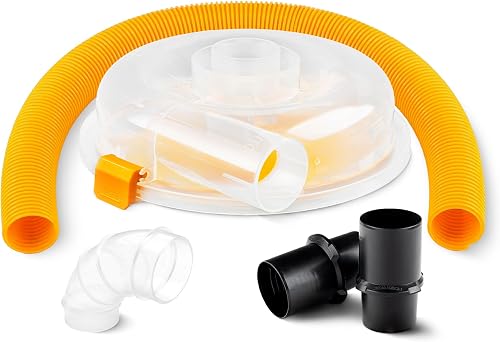
POWERTEC Low Profile Dust Separator for Shop
Best for a stable bucket setup - 7
 Best for running two tools on one vacCheck it
- 8
 Check it
Rockler Dust Right Dust Separator w/ 36”
Best for big chip volume from planers and jointers
Shop vac dust collection add-ons ranked by how much they change your setup
These eight products are ranked by how much they improve a shop vac's dust collection in real use. The top three do the most work: fitting tools to the hose, keeping the filter clear, and running the vac without extra steps.
POWERTEC 2-1/2" to 2-1/4" Dust Collection Reducer: Best for fitting a vac hose to small tool ports
- Converts a 2-1/2 in hose to a 2-1/4 in ID tool port
- Tapered ABS body
- 2-pack
The part that stops most first-time dust setups from leaking at the tool. Two come in the pack, so you can leave one on each machine.
Pros
- Fits band saws, miter saws, sanders and router fences
- Tapered design helps seal air leaks
- Two in the pack
Cons
- Only helps if your tool port is 2-1/4 in ID
This is the first thing to buy after the vac itself. A 2-1/2 in hose is the shop standard, but band saws, miter saws, sanders and router fences often take a 2-1/4 in port.
The tapered ABS body on this reducer converts the big end down so the hose sits snug instead of taped on.
Two come in the pack, which matters more than it sounds. Leave one on the miter saw and one on the sander and you stop swapping fittings every time you change machines.
The precision-molded taper helps hold a seal and keep airflow up, and the ABS plastic shrugs off shop wear.
The trade-off is scope. It solves a 2-1/2 to 2-1/4 in mismatch and nothing else, so a tool with a 1-1/4 in port needs a different adapter.
Check your port size before ordering.
Buy it when your main frustration is a hose that keeps slipping off a small tool port. That single fix often does more for dust capture than a bigger vac.
O'SKOOL Automatic Vacuum Switch: Best for hands-free vacuum start and stop
- Starts the vac when the tool draws over 30W
- 10-second delay off
- 15A total load limit
- 1-year warranty
You switch the tool on and the vac follows. That one behavior changes how often you actually bother to run dust collection.
Pros
- No extra switch to remember
- Delay clears dust from the hose
- Works with table saws, miter saws, routers and sanders
Cons
- Tool and vac together must stay under 15A
Dust collection only works if you actually turn the vac on, and most people forget half the time. This switch plugs between the wall, the tool and the vac: when the tool pulls more than 30W, the vac starts, and after the tool stops the vac keeps running for 10 seconds to clear the hose.
That delay is the useful part. It pulls the dust sitting in the hose into the bucket instead of leaving it to fall out when you move the tool.
The unit uses UL-certified components and a flame-retardant housing, and O'SKOOL backs it with a 1-year warranty.
The real limit is 15A total. A big shop vac plus a table saw can get close, so add up the two nameplate amps before you plug both into one switch.
Keep the tool in the TOOL outlet and the vac in the VAC outlet.
It suits anyone tired of walking to the vac switch mid-cut. It also makes a cyclone setup feel automatic, since the vac and the separator work as one system.
Mullet Cyclone Dust Collector: Best for keeping the vac filter clean
- Pre-separates over 99% of debris
- Parabolic one-piece body
- Cut-to-fit PVC connection
- Hose adapters included
- Made in USA
Mullet's claim is that its faster airstream drops more dust in the bucket before it ever reaches the filter. For sanding and planing, that is where the suction usually goes.
Pros
- Keeps the vac filter working longer
- Rigid PVC connection instead of tape and bungees
- Adapters fit most wet/dry vacs
Cons
- Needs a bucket of your own
- Adds a step to every hose change
Mullet's answer to a clogged filter is a faster spin. The parabolic one-piece body is shaped to speed the airstream so more dust falls into the bucket before it reaches the vac, and Mullet says the separator catches over 99% of debris.
The connection is the other selling point. A rigid, cut-to-fit PVC link replaces the bolts, bungees and duct tape that hold most bucket cyclones together, so the whole thing stays airtight.
Two hose adapters come in the box for wet/dry vacs and extractors.
The trade-off is that it is a separator only. You supply the bucket, and every hose change adds a step compared with running straight into the vac.
At 72 dB it is about as loud as the vac pulling through it.
Mullet builds it in the USA from its Texas base. Pick it when you plane, joint or rout and want to stop changing filters every few sessions.
For light sanding only, the PEMEDOR dual cyclone costs less and does a similar job.
SMZTools 16FT Shop Vac Hose: Best for reach across a long bench
- 16 ft hose
- 1-1/4 in diameter
- 3/4, 1, 1-1/4 and 1-1/2 in adapters
- Rotating air relief valve
- 360 degree swivel
A long, small-diameter hose for moving around the shop without dragging the vac. The relief valve lets you dial back suction for light work.
Pros
- 16 ft of reach
- Four adapters cover many tool ports
- Swivel end resists kinking
Cons
- 1-1/4 in hose moves less air than 2-1/2 in
Most shop vac hoses stop at 6 to 8 ft, which is short when the vac sits against a wall and the bench runs 20 ft. This kit stretches to 16 ft, so you can reach the far end of the shop without dragging the canister.
It is a 1-1/4 in hose, not the 2-1/2 in standard. That means less air volume, so it suits sanders and small tools better than a planer.
Four adapters (3/4, 1, 1-1/4 and 1-1/2 in) cover most power tool ports, and the swivel end resists kinking as you move.
The rotating air relief valve lets you cut suction for light work so the tool does not get pulled down. The multi-layer PVC build is crush-resistant, which helps when you roll a cart over the hose.
Pick it when reach is the problem. If you mainly need to fit a short hose to a bench tool, the POWERTEC reducer at the top of this list is the cheaper fix.
For hose sizing in general, our guide to what size hose a shop vac uses covers the common diameters.
PEMEDOR 2.5'' Dual Cyclone Dust Separator: Best for sanding and fine dust
- Dual cyclone body
- Fits US standard buckets
- 2.5 in inlet and outlet
- 1 m flexible hose included
Two cyclones instead of one for trapping fine sanding dust before it packs the vac filter. The included hose saves a trip to the hardware store.
Pros
- Double cyclone for fine dust
- Snaps onto standard US buckets
- Hose included
Cons
- Bucket not included
- 2.5 in fittings only
Sanding dust is the fine stuff that packs a filter fast. PEMEDOR uses two cyclones instead of one to spin the air harder before it reaches the vac, which should trap more of that fine powder in the bucket.
It snaps onto standard US buckets and takes 2.5 in hose and ports. A 1 m black hose comes in the box (50 mm inner diameter, 58 mm outer), so the first connection is covered.
Most debris lands in the bucket and the filter stays cleaner longer.
The trade-off is that it is a 2.5 in system. If your vac runs a 1-1/4 in hose, you will need an adapter.
The bucket is also not included, so budget for a 5 gallon pail.
Choose it if sanding and general cleanup are most of your shop time. For planer chips and bigger debris, the Rockler or Mullet setups handle volume better.
POWERTEC Low Profile Dust Separator for Shop: Best for a stable bucket setup
- Captures up to 99.9% of dry dust
- Fits 5-gallon buckets
- 2-1/4 in vac port, 2-1/2 in and 4 in systems
- 3 ft hose and elbow included
The low lid sits closer to the bucket rim, so a full bucket tips less than a tall cyclone. The 3 ft hose and 90 degree elbow cover the first connection.
Pros
- Works with 2-1/4 in vac hose and 2-1/2 or 4 in duct
- Low lid resists tipping
- Dual latches and foam gasket for a tight seal
Cons
- Grounding wire not included
A tall cyclone on a bucket can tip when you drag it by the hose. POWERTEC's low-profile lid sits close to the rim and uses dual latches and a foam gasket to keep the seal tight, so a full bucket stays upright.
The fittings are the flexible part. It connects to a 2-1/4 in shop vac hose through the included elbow and adapter, and it also works with 2-1/2 in and 4 in dust collection duct.
POWERTEC says it captures up to 99.9% of dry dust before the filter.
A 3 ft hose, the 90 degree elbow, the gasket and the latches all come in the kit. The one thing to plan for is the grounding wire, which is not included, so add one if static in dry shop air bothers you.
It suits a shop with a fixed 5 gallon bucket under the bench. For a rolling setup with more capacity, the Rockler unit is the better fit.
Jmoe USA 2.5 Inch Shop Vac Y: Best for running two tools on one vac
- Y splitter for 2.5 in hose
- Independent blast gates
- Push-on fit
- Fits Ridgid, Craftsman and Shop-Vac
Two hoses, one vac, and a gate on each line so you send suction where the cut is. It saves swapping hoses between a table saw and a miter saw.
Pros
- Gates let you shut off one line
- Push-on fit needs no clamps
- Fits common 2.5 in systems
Cons
- 2.5 in only
- One splitter per pack
Two tools, one vac, no hose swapping. This Y splitter gives each branch its own blast gate, so you open the line feeding the tool in use and shut the other.
That sends full suction to one port instead of splitting it two ways.
It is built for 2.5 in systems and fits Ridgid, Craftsman, Shop-Vac and most universal attachments. The push-on fit means no clamps or screws for a typical 2.5 in hose end.
Impact-resistant plastic holds up to daily tool switching.
The gate design is the point. With both lines open, suction drops at each tool and dust capture suffers.
Closing the idle branch is what makes a splitter work.
The trade-off is that it only fits 2.5 in hose. If your setup uses 1-1/4 in hose, this is not the part.
Choose it when a table saw and a miter saw share one vac and you want to stop moving the hose.
Rockler Dust Right Dust Separator w/ 36”: Best for big chip volume from planers and jointers
- Cyclone separator with 36 in hose
- 10 gallon translucent bucket
- Five-caster base
- 2-1/4 in ID vac outlet
A complete two-stage setup in one box, with a bucket twice the capacity of many rivals. Planing and jointing fill a small bucket fast, and this one takes longer.
Pros
- 10 gallon bucket holds twice the chips
- Caster base rolls around the shop
- Hose included
Cons
- Costs more than a lid-only separator
- Takes up floor space
This is the complete version of a two-stage setup. The kit includes the cyclone separator, a 36 in hose and a 10 gallon translucent bucket on a five-caster base, so you roll it to the tool instead of carrying the vac.
The 10 gallon bucket holds twice the capacity of many rival systems. That matters when you plane or joint boards and fill a small bucket in one session.
The vortex pulls heavy chips into the bucket before they reach the vac, so the filter and impellers last longer.
The base makes it stable and easy to move. The hoses connect inside the in and out ports, so they do not pull off when you drag the unit.
It converts any vac with a 2-1/4 in ID outlet into a two-stage dust extractor.
The trade-off is floor space and cost. A lid-only separator on a bucket you already own is cheaper and takes less room.
Pick this when chip volume is high and you want the whole thing ready to roll.
How these picks compare side by side
| Product | Best for | Connection | Material | Pack | Our score |
|---|---|---|---|---|---|
| POWERTEC 2-1/2" to 2-1/4" Dust Collection Reducer | fitting a vac hose to small tool ports | 2-1/2 in to 2-1/4 in | ABS plastic | 2 reducers | 9.7 |
| O'SKOOL Automatic Vacuum Switch | hands-free vacuum start and stop | 9.5 | |||
| Mullet Cyclone Dust Collector | keeping the vac filter clean | 9.2 | |||
| SMZTools 16FT Shop Vac Hose | reach across a long bench | 9.0 | |||
| PEMEDOR 2.5'' Dual Cyclone Dust Separator | sanding and fine dust | 8.8 | |||
| POWERTEC Low Profile Dust Separator for Shop | a stable bucket setup | 8.5 | |||
| Jmoe USA 2.5 Inch Shop Vac Y | running two tools on one vac | Plastic | 1 splitter | 8.1 | |
| Rockler Dust Right Dust Separator w/ 36” | big chip volume from planers and jointers | 8.0 |
How we compared these dust collection add-ons
We started from the job each part does in a woodworking shop and scored it on how well it does that job. For reducers and hoses, that meant fit and airflow.
For separators, it meant how much debris stays out of the filter. For switches and splitters, it meant how little the user has to think about them.
The spec sheets carried most of the weight: connection sizes, included adapters, hose length and diameter, bucket capacity, load limits and materials. A part that only works with one hose size scored lower than one that covers several, and a part that needs extra hardware to seal scored lower than a kit that arrives ready to connect.
We also weighed how the parts combine. A reducer, a cyclone and an automatic switch turn one wet/dry vac into a real dust collection system, so parts that play well with others ranked higher.
That is why the reducer takes the top spot: almost every other part on this list needs a good hose connection to work.
The score weighs specs, features and buyer feedback against what you're shopping for. We research and compare; we don't run these in a shop ourselves.
Prices change often, so check the current figure on each product page.
What should you check before buying dust collection for a woodworking shop?
Start with your tool port size, then work backward to the vac. Most dust collection problems in a home shop come from a mismatch at the tool, not from a weak motor.
Measure the inside diameter of the port on your sander, saw or router. Common sizes are 2-1/4 in, 2-1/2 in and 1-1/4 in.
The hose end and the tool end are different fittings, so note both.
Then decide how much dust you make. A few sanding passes a week needs less than planing boards for a furniture project.
That answer sets your bucket size and whether you need a cyclone at all.
How do I choose accessories for a home woodshop vac?
Start with the hose connection at the tool. A reducer that matches your port size fixes most leaks.
Then add a pre-separator if you make fine dust or lots of chips, and an automatic switch if you keep forgetting to turn the vac on.
Is more accessory hardware always better?
No. Each extra fitting is another place air can leak.
Buy the parts that match your actual hose and port sizes, and skip anything that needs an adapter chain to work.
Which separator fits my vac hose and bucket?
Match the separator to the hose you already own. A 2-1/2 in hose needs a 2-1/2 in inlet, and a 2-1/4 in vac outlet needs an adapter.
Bucket fit matters too. The PEMEDOR snaps onto standard US buckets.
The POWERTEC lid is built for 5 gallon buckets. The Rockler kit includes its own 10 gallon bucket on casters.
The Mullet needs a bucket you supply and a cut-to-fit PVC link.
Can I use a 5 gallon bucket with any cyclone?
Most bucket cyclones are made for standard US 5 gallon buckets. Check the lid diameter and latch style before buying.
A bucket with a different rim may not seal, and a poor seal kills suction.
What about static in dry shop air?
Cyclones build static as dust spins. The POWERTEC kit includes grounding hardware but not the wire.
Run a wire from the separator to a ground point if you notice shocks when you touch the bucket.
Does a cyclone separator really protect the filter?
Yes, and it is the single best upgrade for filter life. A cyclone drops most debris in the bucket before it reaches the vac, so the filter sees far less dust.
The numbers the makers give are high. Mullet says its separator catches over 99% of debris.
POWERTEC says its low-profile lid captures up to 99.9% of dry dust. Treat those as maker claims, but the principle holds: less dust in the filter means longer filter life and stronger suction between cleanings.
Cyclone or filter bag?
A cyclone is reusable and catches chips and most dust. A filter bag catches fine dust inside the vac and is thrown away when full.
Many shops run both, with the cyclone first and a bag on the vac for the last of the fine dust.
When is a cyclone not worth it?
For very light cleanup, a cyclone adds a step to every hose change. If you vacuum the shop floor once a week and rarely sand, skip it and clean the filter instead.
Should the vac start when the tool starts?
Yes, if you want dust collection to happen without thinking about it. A tool-triggered switch is the difference between a system you use and one you skip.
The O'SKOOL switch starts the vac when the tool draws over 30W and runs it 10 seconds longer after the tool stops. That delay clears dust from the hose.
Watch the 15A total load limit, because a large vac and a table saw can get close.
What if my vac and tool draw too much current?
Run them on separate circuits or skip the switch. A 15A limit is there for a reason.
Add up the amps on both nameplates before plugging them into one switch.
Where do the accessories sit in a full dust collection plan?
A shop vac is the engine, and the accessories are the plumbing. Get the hose and adapters right, add a cyclone for volume, and let a switch handle the on and off.
That order matters. A big vac with a leaking hose connection collects less dust than a small vac with a tight fit.
Fix the fit first, then the filter protection, then the automation.
Does a shop vac replace a dust extractor for sanding?
Not fully. A dust extractor filters finer dust and often runs quieter.
A shop vac with a cyclone handles chips and cleanup well and costs less. Our shop vac vs dust extractor comparison covers where each one wins.
Can I mount the vac on the wall?
Yes, and it saves floor space in a small shop. A wall mount keeps the canister off the floor and the hose within reach.
See our picks for the best wall-mount shop vacs for the garage if floor space is tight. If you also want to blow dust off tools, a shop vac with a blower port covers both jobs.
The verdict on the best accessories for woodworking dust collection
For most home shops, buy the POWERTEC reducer first and fix the hose connection. It is the cheapest part here and the one that makes everything else work.
Then add the Mullet cyclone if you make chips and the PEMEDOR dual cyclone if sanding dust is your main problem. Finish with the O'SKOOL switch so the vac runs with the tool.
If you want one box that does the separator job with a bucket and hose included, the Rockler Dust Right kit is the ready-made choice. For a long bench and a far wall outlet, the SMZTools 16 ft hose buys reach.
And for two tools sharing one vac, the Jmoe Y splitter saves hose swapping.
The best setup for woodworking dust collection is really a system: a solid wet/dry vac, a tight hose path, a pre-separator in front of the filter, and a switch that makes it automatic. Build it in that order and your suction stays strong all session.
For the bigger picture on vac types and features, our guide to shop vacs with a blower port and our wall-mount picks help you choose the canister itself. And if hose diameter is still a puzzle, the shop vac hose size guide settles it.
Our top 3 picks at a glance
-
1
Best for fitting a vac hose to small tool ports
POWERTEC 2-1/2" to 2-1/4" Dust Collection Reducer
9.7/10 our score
See it on Amazon -
2
Best for hands-free vacuum start and stop
O'SKOOL Automatic Vacuum Switch
9.5/10 our score
See it on Amazon -
3
Frequently asked questions
What shop vac accessories matter most for woodworking dust collection?
Start with the connection between the hose and the tool. A tapered reducer for a 2-1/2 in hose to a 2-1/4 in tool port is the part most home shops need first.
After that, a pre-separator protects the filter and an automatic switch keeps the vac running only when the tool does.
Does a shop vac hose fit my sander or miter saw?
Only sometimes. Many benchtop tools have a 2-1/4 inch inside-diameter port, while standard shop vac hose is 2-1/2 inches.
A tapered reducer bridges the two.
Measure your tool port before buying adapters, since 1-1/4 inch ports are also common.
Do I need a cyclone separator on my shop vac?
Yes if you sand, plane or rout regularly. A pre-separator drops most debris in a bucket before it hits the filter, so the filter clogs less and suction stays stronger between cleanings.
It also keeps filter replacement costs down over a year of shop work.
Can I run two woodworking tools from one shop vac?
Yes, with a Y splitter that has a blast gate on each branch. Open only the line feeding the tool in use so full suction goes to one port.
Shutting both gates while the vac runs is hard on the motor.