Best Shop Vacs for Drywall Dust: How to Choose
The best shop vac for drywall dust pairs a true HEPA filter with enough airflow and tank size for your job. For most sanding and renovation cleanup, an 8-gallon HEPA dust extractor with automatic filter cleaning is the strongest choice, while a compact 5-gallon HEPA wet/dry vac suits smaller patches.
On this page (11 sections)
- Why does drywall dust need a different shop vac?
- Which filter type actually traps drywall dust?
- How much tank size do you need for drywall dust?
- How does airflow and motor power affect dust pickup?
- Which HEPA shop vac is the best pick overall?
- Which compact HEPA vac suits small patch jobs?
- How do you keep a filter from clogging on drywall dust?
- Is a dust extractor better than a shop vac for drywall dust?
- Where should the vac live during a renovation?
- How should you handle drywall dust safely?
- What is the best shop vac for drywall dust overall?
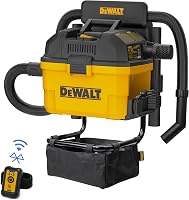
The best shop vac for drywall dust is a HEPA-rated unit with enough airflow to keep up with sanding and demolition. For most renovation cleanup, the DeWalt DWV010 8-Gallon HEPA Dust Extractor is the pick, because its automatic filter cleaning keeps suction steady while you work.
Drywall dust is not like sawdust. Gypsum powder is fine enough to pass through coarse filters and settle on every surface in the room, so filtration matters more than raw tank size.
A vac that traps the dust at the filter saves you from sanding the same wall twice.
This guide explains what separates a vac that handles drywall dust from one that just spreads it. It also covers tank size, filter upkeep and the wet/dry jobs that come up during a renovation.
Why does drywall dust need a different shop vac?
Drywall dust needs a shop vac with fine-particle filtration because gypsum powder is far finer than wood chips or general debris. A standard cartridge filter lets much of that powder pass straight back into the air.
The dust comes from cut sheets, sanded joints and demolished boards. It hangs in the air for hours and coats light fixtures, trim and floors.
A vac with a coarse filter captures the chunks and releases the fine fraction, which is the part you notice on every surface.
HEPA-rated filtration traps a much smaller particle size. The WEN VC4710 uses an F9 HEPA filter that WEN says catches particles as small as 0.3 microns.
That rating is the difference between cleaning a room and stirring it.
Airflow matters just as much as the filter. Fine dust packs into pleats quickly, so a vac with strong suction and a way to clear the filter holds up longer between cleanings.
A 15-amp motor like the DeWalt's delivers 150 CFM of airflow for sustained sanding work.
Rule: for any indoor drywall sanding, choose a vac with HEPA or high-efficiency filtration and plan how you will keep the filter clear.
Which filter type actually traps drywall dust?
A true HEPA filter is the right choice for drywall dust, with a high-efficiency cartridge as the minimum. Standard paper filters are not fine enough for gypsum powder.
Three filter types show up on shop vacs, and they behave very differently on drywall dust.
- Standard cartridge: catches larger debris and sawdust. On drywall dust it loads up fast and lets fine powder through.
- High-efficiency cartridge: finer pleats than a standard filter. It helps on light dust but still clogs on heavy sanding.
- HEPA: traps the smallest particles. The DeWalt DWV010 and WEN VC4710 both ship with HEPA-rated filtration for this reason.
Check the model's stated particle rating rather than trusting the word "filter" on the box. A 0.3-micron rating is a useful benchmark for drywall dust.
If you already own a Shop-Vac, a filter upgrade is often cheaper than a new vac. The Shop-Vac 90304/90344 Cartridge HEPA Filter uses 4-layer HEPA material and fits many Shop-Vac 5-16 gallon models.
Shop-Vac says it is up to 5 times more efficient than the standard cartridge filter.
Rule: if the vac does not name a HEPA or fine-particle rating, it is not the right tool for sanding drywall indoors.
How much tank size do you need for drywall dust?
Tank size should match the dust volume of your job: 5 gallons for patches and single rooms, 8 gallons or more for whole-house sanding. Bigger tanks mean fewer stops to empty.
Drywall dust is bulky when it is fluffy off the sander and packs down as it settles. A small tank fills faster than the same tank does with sawdust.
Every emptying stop also means dust escaping into the room unless you bag the waste.
| Job size | Suggested tank | Why |
|---|---|---|
| A few patches or one closet | 5 gallons | Light dust volume, easy to carry |
| One room, walls and ceiling | 8 gallons | Fewer stops during a sanding session |
| Several rooms or a remodel | 8 gallons and up | Continuous work without constant emptying |
The WEN VC4710 carries a 5-gallon tank in a compact body with a handle. That suits a patch job or a small repair where carrying the vac up a ladder matters more than capacity.
The DeWalt DWV010 holds 8 gallons and runs on heavy-duty wheels and casters. On a whole-room job the larger tank and the wheeled base cut down how often you stop and how much you carry.
Rule: buy for the biggest dust load you will handle in one session, then empty the tank before it reaches the inlet.
How does airflow and motor power affect dust pickup?
Airflow decides how well a vac pulls dust off a surface and through the filter. A 15-amp motor with 150 CFM handles sustained sanding better than a 10-amp compact unit.
Suction alone is not the whole story. Fine dust needs both strong airflow and a filter that stays open.
When the filter loads, airflow drops and dust starts escaping around the sander or nozzle.
The DeWalt's 15-amp motor delivers 150 CFM of airflow, which DeWalt pairs with automatic filter cleaning. The WEN VC4710 runs a 10-amp motor in a lighter body.
That is enough for spot cleaning and small patches, but a full room of sanding will tax it sooner.
Power tool actuation is another feature worth knowing. The DeWalt DWV010 controls its on and off operations through a connected power tool, so the vac starts when the sander does.
That keeps the vac running only while dust is being made.
Rule: match motor power to the job length. A 10-amp vac suits short sessions; a 15-amp unit with strong airflow suits full days of sanding.
Which HEPA shop vac is the best pick overall?
The DeWalt DWV010 8-Gallon HEPA Dust Extractor is the best overall pick for drywall dust because it combines HEPA filtration, 150 CFM of airflow and automatic filter cleaning in one unit. The automatic filter clean pulses every 30 seconds, so you keep working instead of stopping to clear the pleats.
The 15 ft anti-static hose reaches across a room without dragging dust back onto the work. A universal hose connector with swivel capability lets you attach sanding tools or nozzles.
Heavy-duty wheels and casters carry the unit around a job site.
The EPA note matters for renovation work. DeWalt says the DWV010 meets the EPA Lead Related Renovations, Repair and Painting rule for HEPA vacuums only when DWV9330 filters are used.
If your job involves older painted surfaces, fit those filters first.
Pick the DeWalt for whole-room sanding, demolition dust and any job where you want the vac to keep pulling without babysitting the filter. It is the pick for most drywall projects.
Which compact HEPA vac suits small patch jobs?
The WEN VC4710 5-Gallon HEPA Wet/Dry Vac is the best small-job pick because its compact body and F9 HEPA filter handle patches without hauling a big extractor up a ladder. The 0.3-micron filter catches the fine gypsum powder that a standard vac releases.
The compact body and carrying handle make it easy to move between rooms and store afterward. Onboard storage keeps the 5 ft hose, two extension tubes, utility nozzle and crevice nozzle together.
A two-year warranty backs the unit.
It also works as a blower, which helps clear dust off drop cloths and out of corners after vacuuming. That dual use matters during a renovation when you are cleaning up constantly.
Our roundup of shop vacs with a blower port covers more dual-purpose options.
The 5-gallon tank fills quickly on large jobs, and the 5 ft hose is shorter than the DeWalt's 15 ft. That makes it a patch-job tool rather than a whole-house one.
Pick the WEN for small repairs, single rooms and quick cleanup between coats of mud. It is the easiest HEPA vac to carry and store for occasional drywall work.
How do you keep a filter from clogging on drywall dust?
Keep a drywall filter from clogging by using a fine-dust bag, checking the pleats often and cleaning or replacing the filter before airflow drops. Automatic filter cleaning helps, but no filter runs forever on gypsum powder.
Drywall dust packs into pleats tighter than sawdust. A few minutes of sanding can load a standard cartridge enough to cut suction in half.
The fix is prevention rather than waiting for the vac to wheeze.
- Fit a collection bag rated for fine dust so most powder lands in the bag, not the pleats.
- Check the filter after each sanding session and shake or wash it as the maker allows.
- Empty the tank before dust reaches the inlet.
- Replace the filter on the maker's schedule; the Shop-Vac cartridge recommends replacement every 4-5 months depending on use.
- Store the vac with a clean, dry filter so it is ready for the next session.
The Shop-Vac 90304/90344 cartridge is washable and reusable. Shop-Vac says it can be cleaned with mild water and dried in the sun.
That makes it a practical spare for a vac you already own.
If you also cut wood during the renovation, dust types mix and filters load faster. Our guide to the best shop vac for woodworking dust collection covers what changes when sawdust joins the mix.
Rule: budget for filter upkeep as part of the job. A spare HEPA cartridge is the cheapest way to keep sanding without a mid-job stop.
Is a dust extractor better than a shop vac for drywall dust?
A dust extractor is better than a standard shop vac for heavy drywall sanding, because extractors are built for continuous fine-dust work. A HEPA shop vac is enough for light cleanup and small patches.
The line between the two has blurred. The DeWalt DWV010 is sold as a dust extractor but works like a shop vac with HEPA filtration and automatic filter cleaning.
A compact vac like the WEN VC4710 covers the same filtration in a lighter body.
The real difference shows up in how long the unit runs and how well it holds airflow. An extractor with automatic cleaning is made to run for hours beside a sander.
A basic shop vac with a standard filter is not.
Wet pickup is the other factor. A wet/dry vac like the WEN handles spills as well as dust.
A dedicated extractor is usually dry-only. If your renovation includes mopping up or a plumbing leak, that matters.
Our comparison of a shop vac vs dust extractor breaks down when each one earns its place.
Rule: choose an extractor-style unit for long sanding sessions; choose a HEPA wet/dry vac for mixed cleanup and smaller dust loads.
Where should the vac live during a renovation?
Keep the vac close to the dust source and on the same floor as the work. A vac parked across the house loses suction through a long hose and lets dust escape between rooms.
Placement affects how much dust you capture. A vac that sits at the doorway pulls dust toward the room exit.
A vac next to the sander catches it at the source before it spreads.
- Keep the hose run short and the path clear so the vac does not tip.
- Set the unit on a level surface; the DeWalt's wheels and casters help on uneven floors.
- Keep the power cord and hose away from walkways.
- Bag and seal dust before carrying it through clean rooms.
- Wipe down the vac's exterior before moving it to another part of the house.
For a permanent spot in a garage or workshop, a wall-mounted vac keeps the floor clear. Our guide to the best wall mount shop vac covers models that hang out of the way and still handle fine dust.
Rule: put the vac where the dust is made, not where it is convenient to store. Capture at the source beats cleaning the room afterward.
How should you handle drywall dust safely?
Treat drywall dust as a health hazard and control it at the source. Wear a respirator, seal the work area and use HEPA filtration on the vac so fine powder does not recirculate.
Gypsum dust is a respiratory irritant, and sanding joints sends a lot of it into the air. A shop vac helps only if it traps the dust rather than blowing it back out.
HEPA filtration is the main defense on the tool side.
Seal doorways with plastic sheeting and turn off forced-air heating or cooling during sanding. Keep the vac running while you work and for a few minutes after you stop, so airborne dust gets pulled in.
Wear a fitted respirator rated for fine dust, not a simple cloth mask.
Empty the vac outdoors or in a garage, and bag the waste before it goes in the trash. Wash hands after handling the filter.
If dust bothers your breathing or you have a lung condition, talk to a doctor before taking on a large sanding job.
Check local rules for renovation waste too. Some areas treat gypsum dust and demolition debris differently from regular trash.
Rule: safety comes before speed. A HEPA vac, a respirator and a sealed work area are the baseline for any indoor drywall sanding.
What is the best shop vac for drywall dust overall?
The best shop vac for drywall dust for most people is the DeWalt DWV010 8-Gallon HEPA Dust Extractor. Its 8-gallon tank, 150 CFM airflow and automatic filter cleaning handle whole-room sanding without constant filter stops.
Pick the WEN VC4710 if your jobs are small patches and you want a lighter vac to carry. Upgrade an existing Shop-Vac with the Shop-Vac 90304/90344 HEPA cartridge if the vac itself still runs well.
For any indoor sanding, start with HEPA filtration and a plan for filter upkeep. That combination is what separates a vac that controls drywall dust from one that just moves it around.
Frequently asked questions
Can a regular shop vac handle drywall dust?
A regular shop vac can pick up drywall dust only if it has a fine-particle or HEPA filter fitted. Standard filters clog quickly on gypsum dust, so upgrade the filter or choose a vac rated for fine dust before sanding.
Is HEPA filtration necessary for drywall dust?
HEPA filtration is the safest choice for drywall dust because it traps the fine gypsum particles that pass through coarse filters. If the job is small and well ventilated, a high-efficiency cartridge filter helps, but HEPA is better for indoor renovation work.
What size shop vac do I need for a drywall project?
A 5-gallon vac suits small patches and single rooms, while an 8-gallon or larger tank handles whole-house sanding without constant emptying. Match tank size to the amount of dust you expect, not to the size of the vac you can store.
Can drywall dust clog a shop vac filter?
Drywall dust clogs filters faster than sawdust because gypsum particles are very fine and pack tightly into the pleats. Automatic filter cleaning, a washable HEPA cartridge or frequent filter checks keep airflow from dropping mid-job.
Should I use a bag with a shop vac for drywall dust?
A collection bag helps on drywall dust by keeping most of the powder out of the filter pleats. Use a bag rated for fine dust along with a HEPA filter, and empty the tank before it fills to the inlet.